You eat a normal meal. Nothing heavy. Nothing unusual. And then suddenly — something feels off. Your head goes light. Your balance shifts. Standing up feels harder than it should.
You start wondering: was it the food? Or something else?
I spent weeks asking myself that question. And the confusing part was that sometimes a meal would trigger symptoms instantly — and other times, the exact same food would be completely fine. It felt random until I figured out what was actually going on.
If you’ve noticed that eating makes your dizziness worse — or that certain meals seem to knock you off-balance — you’re not imagining it. Food is one of the most overlooked vestibular migraine triggers, and understanding how it works changed my entire approach to managing this condition.
In this post:
- How food triggers dizziness (with a simple visual)
- My real experience with food reactions
- The specific foods that made things worse
- Why the same food affects you differently on different days
- What actually helped
If you’re reading with brain fog right now, here’s the short version: Yes, food can trigger dizziness — especially with vestibular migraine. It’s a brain reaction, not a stomach problem. It can happen on its own or push your system past its threshold when other triggers are already stacking. Keep reading for the details, or skip to “What actually helped” at the bottom.
How food triggers dizziness — the threshold model
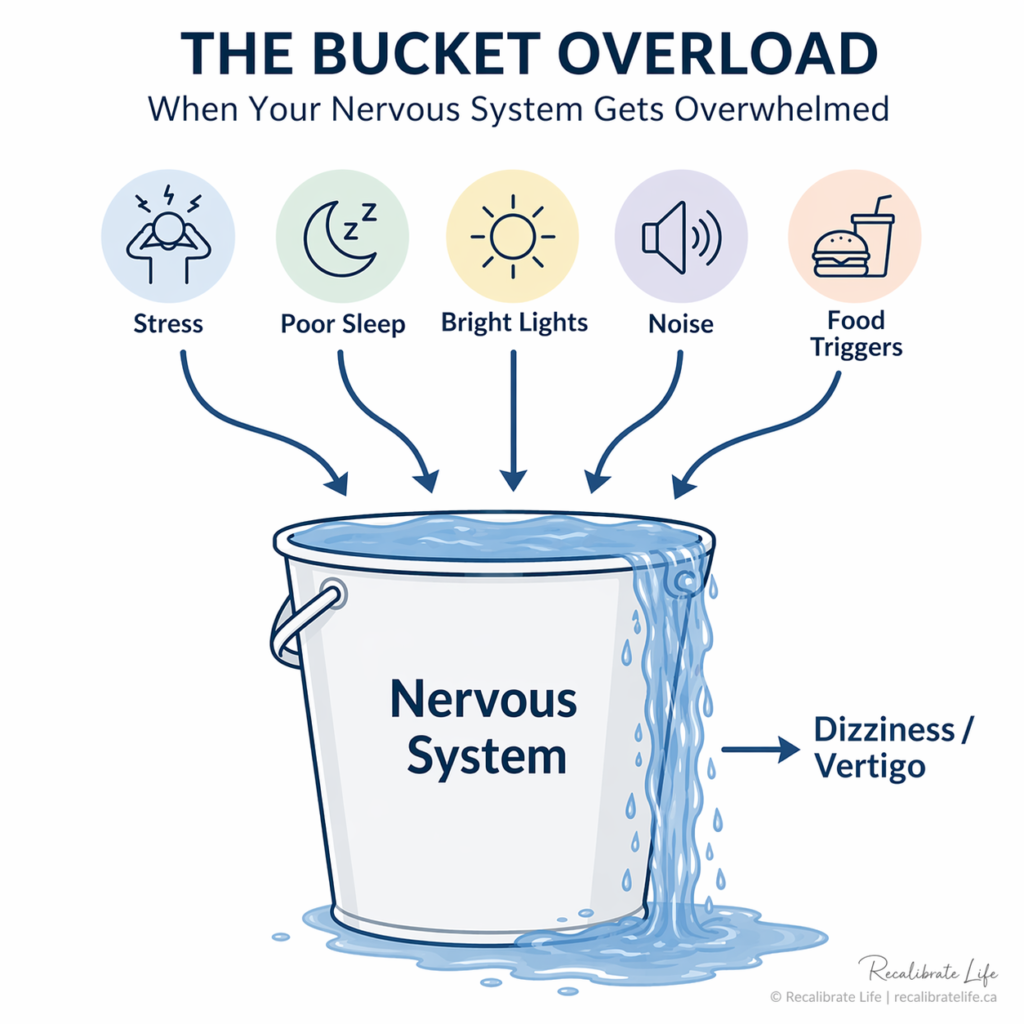
The easiest way to understand food triggers is to think of your system like a bucket.
Every trigger you experience during the day adds to your bucket — poor sleep, stress, bright lights, noise, physical activity. On a good day, the bucket is mostly empty. On a bad day, it’s already half full before you’ve done anything.
Food is one more thing going into that bucket. On a good day, a trigger meal might add to the bucket without overflowing it — you feel fine. On a bad day, that same meal is the thing that tips it over the edge — and the dizziness spikes.
This is why the same food can affect you differently on different days. It’s not that the food changed. It’s that your system’s capacity changed. The question isn’t just “what did I eat?” — it’s “how much load was my system already carrying?”
That single insight changed everything for me. I stopped blaming individual foods for every bad day and started looking at the full picture.
But here’s the important part — sometimes food alone is enough. There were days when my system was relatively calm, and a single trigger meal still caused a significant reaction. Food isn’t always just the last straw. It can be the whole straw.
My real experience with food reactions
I used to think food only affected me when I was already tired or stressed. Then I had a meal that proved me wrong.
I was feeling relatively okay that day. Not great, but functional. Then I ate a simple sandwich — processed bread, ketchup, eggs. Within minutes, not hours, the dizziness spiked so hard that I couldn’t get up from the chair. My body felt like it was shutting down. I had to lie flat for hours before the worst of it passed, and I was still noticeably off-balance for days afterward.
That wasn’t a slow digestive reaction. That was my nervous system responding almost instantly to something in that food.
This is a critical distinction that most people miss: food-triggered dizziness with vestibular migraine is a brain reaction, not a stomach reaction. Your nervous system, when it’s sensitized, can react to certain food components within minutes — not the hours you’d expect if this were a digestive issue.
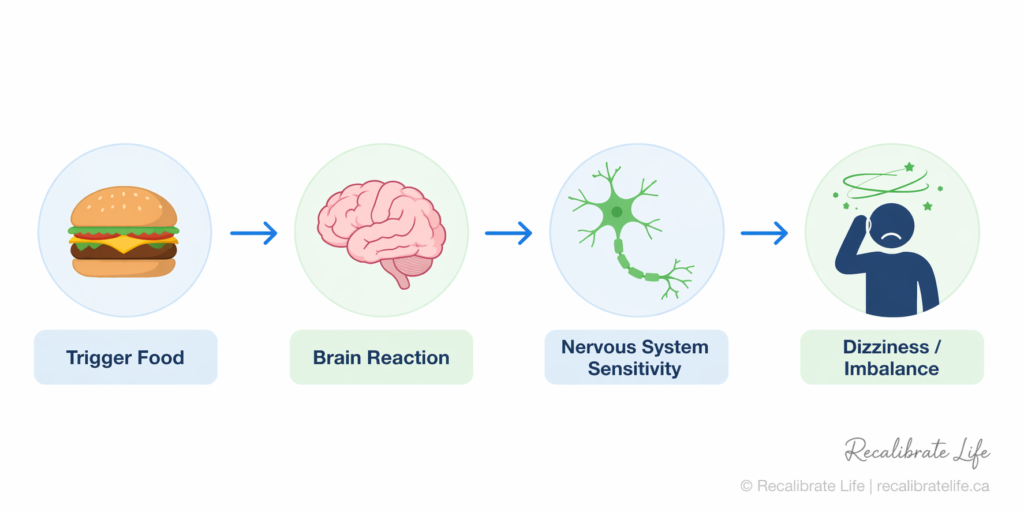
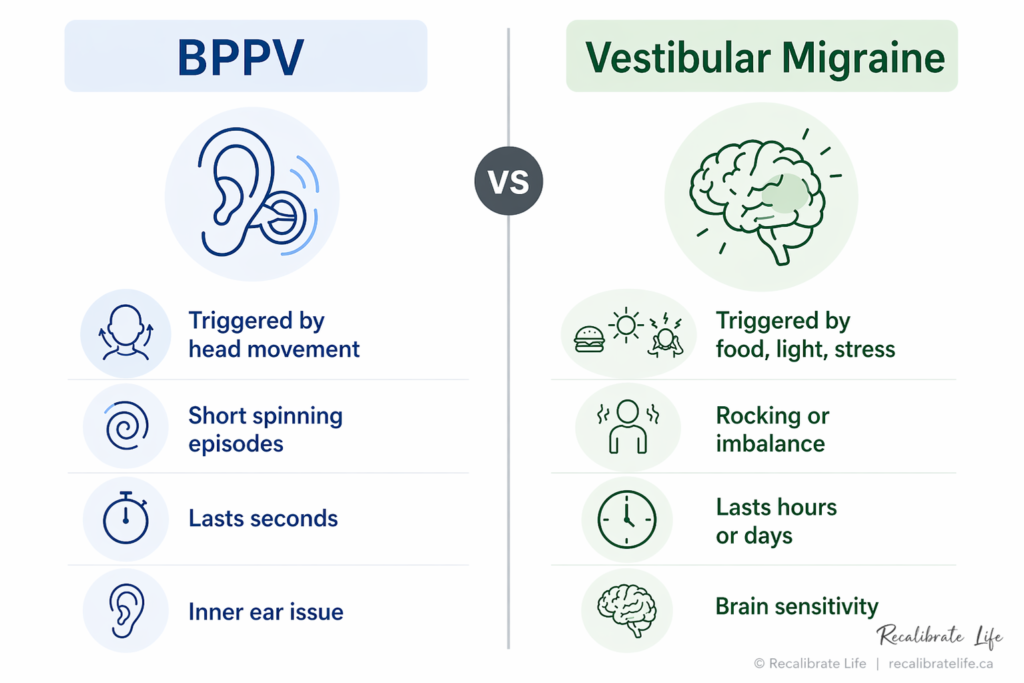
And this is also how you know it’s not BPPV. Benign Paroxysmal Positional Vertigo does not react to food. If eating makes your dizziness worse, that’s not a crystal problem in your inner ear — that’s your vestibular migraine responding to a trigger.
The foods that made things worse
Through months of tracking and paying attention, I identified the foods that consistently affected me. These aren’t theoretical — they’re from my own experience.
Processed foods were the most consistent trigger. Packaged meals, fast food, anything with a long ingredient list full of additives and preservatives. The more processed the food, the more likely it was to cause a reaction.
Ketchup and condiment sauces surprised me. I didn’t think something as simple as ketchup could be a trigger until I noticed the pattern. Many condiments contain MSG, high sodium, preservatives, and other additives that can activate migraine pathways.
White bread and processed baked goods were a regular problem. Commercial bread contains more additives than most people realize — dough conditioners, preservatives, added sugars. These aren’t always listed prominently on the label.
Heavy, oily foods consistently made things worse. Deep-fried food, meals cooked with excessive oil, heavy fats — these would thicken the brain fog and amplify the imbalance.
Combination meals were often worse than individual ingredients. A sandwich with processed bread, sauce, and fried filling was worse than any of those components alone. The combination created a larger trigger load than any single ingredient.
The pattern I noticed: It wasn’t about one specific ingredient. The foods that triggered me most were processed, heavy, and contained multiple potential trigger components stacked together. Simple, whole-food meals with fewer ingredients were almost always safer.
Why the same food hits differently on different days
This was one of the most frustrating parts early on. I’d eat something that caused a terrible reaction one day, then eat the same thing a week later and feel fine. It made me doubt whether food was actually a trigger at all.
The answer goes back to the threshold model. Your reaction to food depends on how much load your system is already carrying.
Sleep is the biggest factor. After a poor night of sleep, my food tolerance drops significantly. The same meal that was fine after a good night’s rest can spike symptoms after a bad one.
Stress raises the baseline. When your nervous system is already activated from stress, it takes less food input to push you past the threshold.
Previous exposure matters. If you’ve spent the morning in a bright, noisy environment and your system is already loaded, a trigger meal on top of that is much more likely to cause a reaction than the same meal eaten in a calm, quiet setting.
Time of day plays a role. I noticed that meals eaten when I was already fatigued — later in the day, after accumulated exposure — were more likely to trigger symptoms than the same food eaten in the morning when my system was fresh.
This is why keeping a food diary alone doesn’t always give clear answers. You need to track what you ate alongside how you slept, your stress level, and what environmental exposure you had that day. The food is one variable — the system load is the other.
The hidden trigger: food plus environment
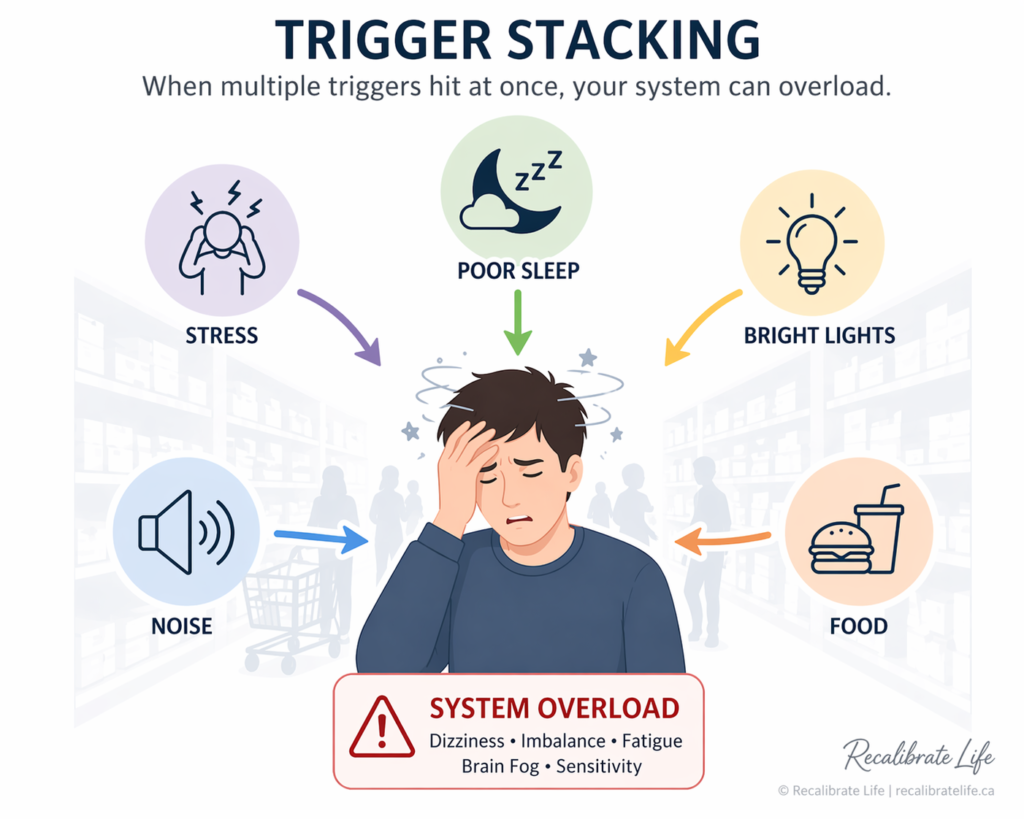
One pattern that took me a while to recognize was how much worse food reactions became when combined with environmental triggers.
Eating a meal in a quiet, calm, dimly lit room — manageable.
Eating the same meal in a bright, noisy environment with people moving around — significantly worse.
The food itself didn’t change. But the total input my brain was processing changed dramatically. Adding a trigger meal on top of an already stimulating environment was often the combination that pushed me over the edge.
This is why some of my worst food reactions happened during late shifts — hours of fluorescent lighting and noise had already loaded my system, and then food was the final input that tipped it past the threshold.
If you’ve noticed that eating at home feels safer than eating out — even when you eat the same food — this is likely why. It’s not just the food. It’s the environment you’re eating in.
What actually helped
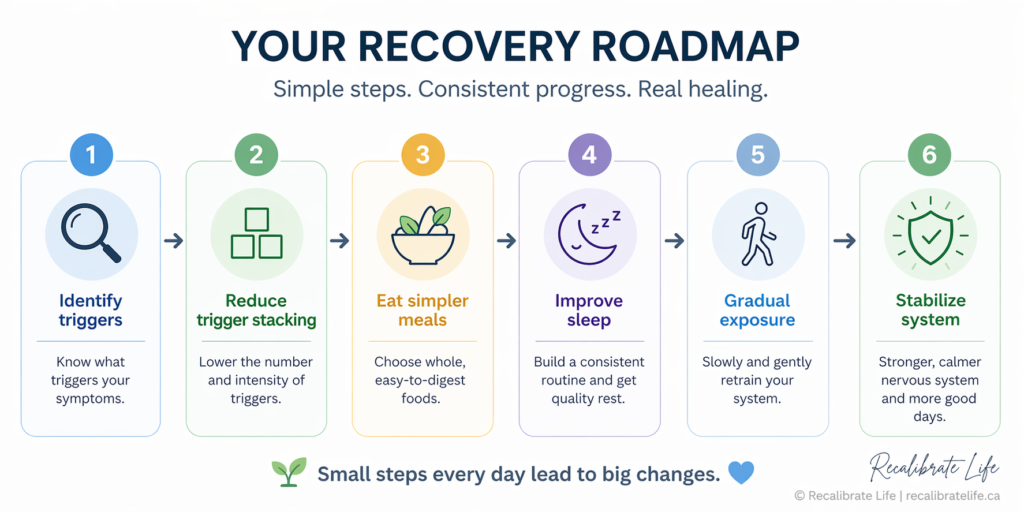
Managing food triggers isn’t about eliminating everything. It’s about being strategic.
Eating simpler meals made the biggest difference. Fewer ingredients, less processing, less oil. A meal with three or four whole-food ingredients was almost always safer than a meal with fifteen processed ones. This doesn’t mean eating bland food forever — it means reducing the trigger load in what you eat.
Eating in calm environments matters more than most people realize. When I eat in a quiet, controlled setting, my tolerance for trigger foods goes up. When I eat in a busy, bright, noisy space, even safe foods can feel harder to process. Where you eat is almost as important as what you eat.
Paying attention to timing helped me avoid the worst reactions. Eating when my system was already fatigued or overloaded made reactions more likely. Eating earlier in the day, when my system was fresh and my baseline was low, gave me more tolerance.
Tracking food alongside everything else is what finally revealed the patterns. Not just what I ate — but how I slept, my stress level, what environments I’d been in, and how I felt before the meal. That full picture is what helped me understand why the same food affected me differently on different days.
Medication played a supporting role. It helped stabilize my baseline sensitivity over time, which meant my threshold was higher and food triggers didn’t hit as hard. It wasn’t a cure for food reactions — but it raised the floor so that smaller triggers were less likely to push me over.
The shift in thinking that changed everything: I stopped asking “which food is causing this?” and started asking “how sensitive is my system right now?” That reframe changed my entire approach. Instead of trying to build a perfect safe-food list, I focused on managing my overall system load — and food management became one part of that bigger picture.
Food is a trigger, not a life sentence
If you’re in the early phase of this journey and it feels like every meal is a potential landmine, I understand. I’ve been there. The anxiety around eating — wondering if the next meal will knock you off-balance — is real and exhausting.
But it does get better. As your system stabilizes through medication, lifestyle changes, and vestibular exercises, your food tolerance increases. Meals that used to spike your symptoms become manageable. The reactions become less severe and shorter in duration.
You don’t have to eat perfectly forever. You just need to be aware of your triggers, respect your system’s current capacity, and make informed choices based on how your day is going.
Some days you’ll have more tolerance. Other days you’ll need to play it safe. And that’s okay — because understanding the pattern is what gives you control.
If you’re trying to identify all the triggers that affect you — food and beyond — I’ve put together a free Vestibular Trigger Checklist covering food, light, sound, sleep, stress, and environmental triggers. Drop your email and I’ll send it to you.
Related posts: