When I first started researching vestibular migraine triggers, weather was on every list I found. Barometric pressure drops. Storms rolling in. Humidity changes. Seasonal shifts. Every blog and forum post seemed to confirm it: weather makes dizziness worse.
So I started watching the weather. Tracking it alongside my symptoms. Waiting for the pattern to emerge.
It didn’t.
After months of paying attention, I couldn’t find a consistent connection between weather and my symptoms. Some of my worst days happened on perfectly calm, sunny days. Some of my best days happened during storms. The pattern I kept looking for simply wasn’t there — at least not for me.
And that’s the honest answer I want to share with you. Not because weather doesn’t affect anyone — it clearly does for some people. But because I think there’s something more important than chasing every possible trigger: focusing on the ones that actually show up in your patterns.
In this post:
- What the research says about weather and vestibular conditions
- Why I couldn’t find the pattern in my own experience
- What was actually driving my symptoms
- Why weather gets blamed so often
- How to figure out if weather affects YOU
- Why not every trigger applies to everyone
Short version for brain fog readers: Weather can affect some people with vestibular conditions, but it’s not universal. In my case, food, light, sound, sleep, and overall system load were far stronger and more consistent triggers than weather. Don’t force patterns that aren’t there — focus on the triggers that actually show up in your tracking.
What the research says
There is real science behind weather affecting vestibular conditions. Barometric pressure changes can influence the fluid dynamics in your inner ear. Rapid pressure drops — like before a storm — can theoretically shift the balance of fluid in the vestibular system, creating a sensation of imbalance or triggering a migraine episode.
For some people with vestibular migraine, this connection is strong and consistent. They can feel a storm coming before the weather app knows about it. Their symptoms reliably worsen with specific pressure changes, humidity levels, or temperature shifts.
This is real. And if you’re one of those people, weather absolutely belongs on your trigger list.
But here’s what most blogs don’t tell you: not everyone with VM experiences weather as a trigger. The research shows it affects a subset of migraine patients, not all of them. And treating it as a universal trigger can lead you to chase a pattern that might not exist in your specific case — while missing the ones that actually matter.
My honest experience
I wanted weather to be a trigger. That sounds strange, but there’s a logic to it — if weather was a factor, it would explain some of the unpredictability in my symptoms. It would give me another variable to account for and plan around.
So I tracked it. On bad days, I’d check the barometric pressure. Before storms, I’d pay extra attention to how I felt. I compared cloudy days to sunny days, cold spells to warm ones.
And after months of this, the honest conclusion was: I couldn’t find a consistent link.
My worst days didn’t line up with weather events. My best days didn’t correspond to stable barometric pressure. The correlation simply wasn’t there in my data.
What I did find — consistently, repeatedly, and clearly — was that my symptoms were driven by things much closer to home: what I ate, how I slept, how much sensory load I’d been exposed to, and how much I’d pushed my system the day before.
I spent time looking at the sky for answers. But my answers were in my daily habits.
What was actually driving my symptoms
Once I stopped trying to force the weather connection, I focused on the triggers that actually showed up in my tracking. And the picture became much clearer.
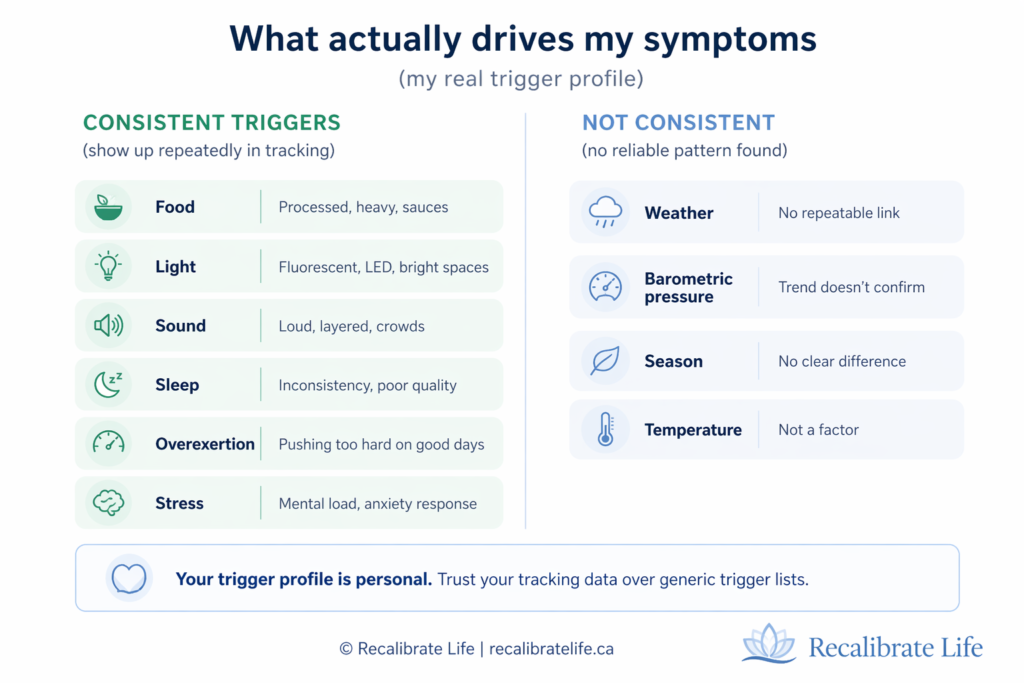
Food had a direct, repeatable impact. Processed foods, heavy fats, certain sauces and condiments — these consistently made my symptoms worse, sometimes within minutes. The connection was unmistakable once I paid attention.
Light and sound were constant factors. Fluorescent lighting, busy visual environments, loud or layered noise — these reliably increased my dizziness and brain fog regardless of what the weather was doing outside.
Sleep consistency was one of the biggest drivers. A bad night of sleep or an inconsistent schedule would almost guarantee a harder next day. This pattern was rock solid — far more reliable than anything weather-related.
System overload from the previous day explained most of my “random” bad days. Pushing too hard on a good day would reliably lead to a crash the next morning. That pattern had nothing to do with weather and everything to do with pacing.
Stress and cognitive load amplified everything. A stressful day with high mental demand would lower my threshold for all other triggers. Again — no weather connection needed to explain it.
The point isn’t that weather can’t be a factor. The point is that for me, the strongest and most actionable triggers were all within my control. I couldn’t change the barometric pressure. But I could change what I ate, how I slept, and how I paced my days.
Why weather gets blamed so often
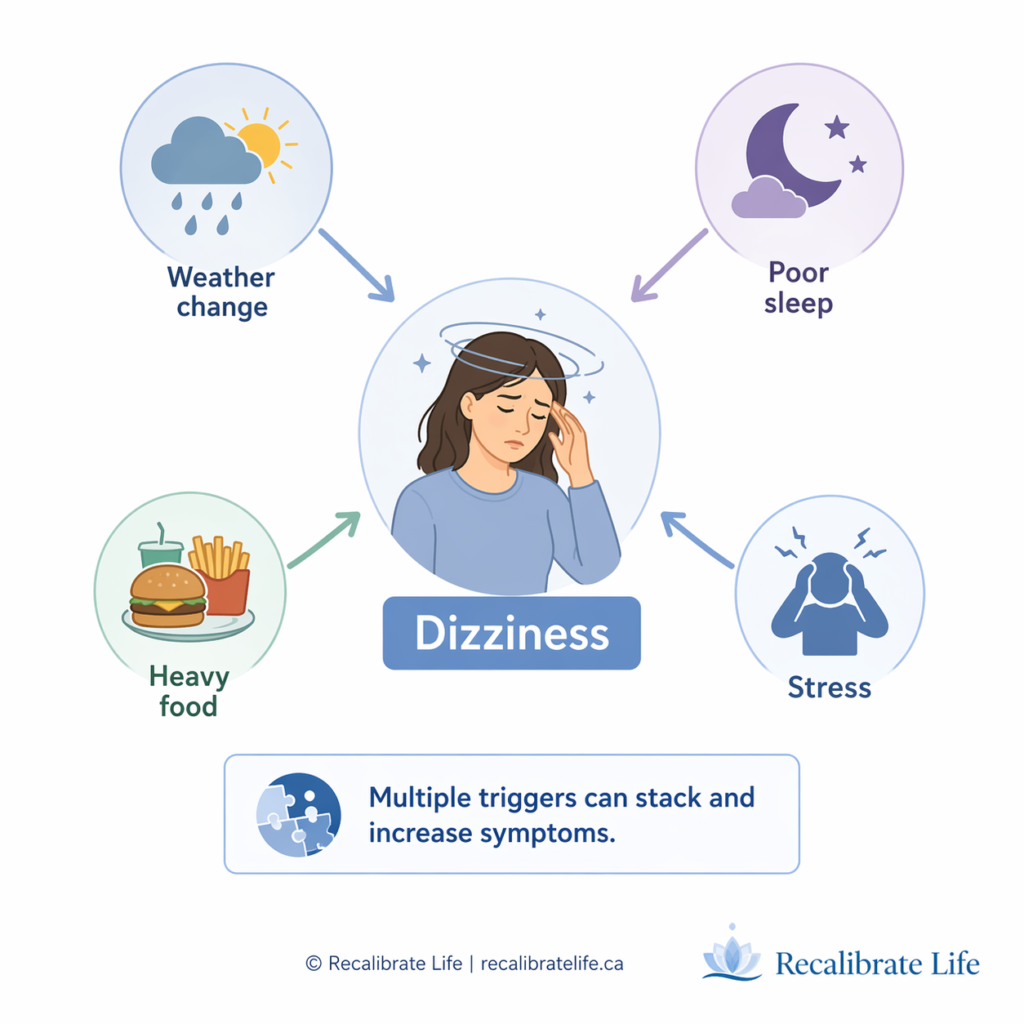
A lot of people with vestibular migraine do report genuine weather sensitivity. That’s valid and real for them.
But here’s something worth considering: weather changes often happen at the same time as other things that affect your system. A stormy day might also be a day when you slept poorly because of the noise. A pressure drop might coincide with lower energy, mood shifts, or routine changes. A cold snap might mean you stayed indoors under artificial lighting all day instead of getting outside for a walk.
It’s easy to look at the weather and say “that’s why I feel bad today” because it’s visible, external, and out of your control. But when you track carefully, sometimes the real cause is the poor sleep, the skipped walk, or the comfort food you ate — all of which happened to coincide with the weather change.
I fell into this trap myself. On bad days, I’d check the weather app looking for an explanation. And sometimes the pressure had dropped, so I’d think “that must be it.” But when I looked at the full picture — my sleep, my food, my activity level the day before — the real drivers were already there. The weather was just the easiest thing to point to.
This doesn’t mean weather is never a factor. For some people, it clearly is. But before you add weather to your trigger list, make sure you’ve ruled out the triggers that were already stacking that day.
How to figure out if weather affects YOU
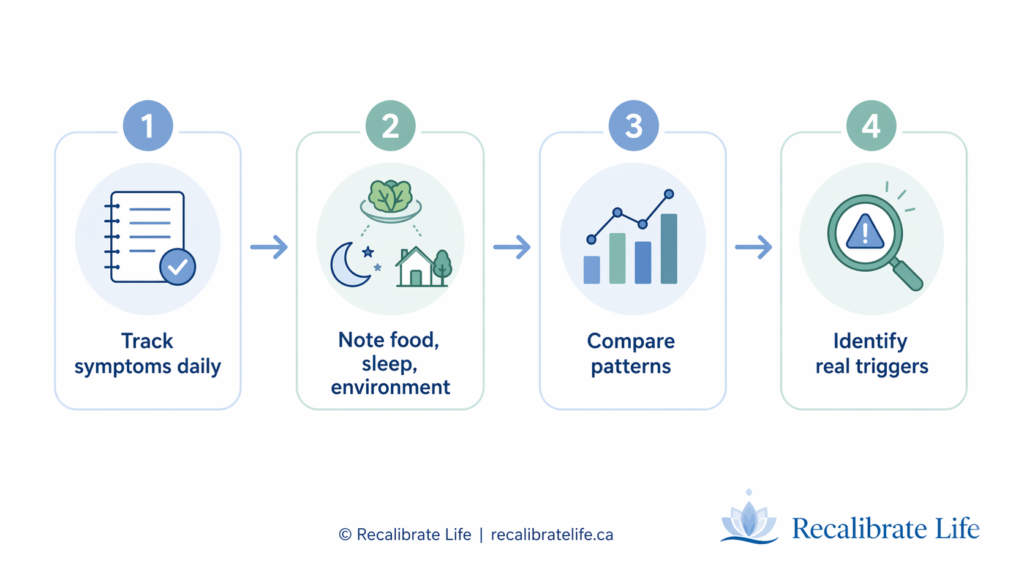
Just because weather wasn’t a significant trigger for me doesn’t mean it isn’t for you. People’s vestibular systems are different, and trigger profiles vary from person to person. Here’s how to find out if weather is relevant in your case.
Track it alongside everything else. For two to four weeks, note the weather conditions on your daily tracker — was it sunny, cloudy, rainy, stormy? Did the barometric pressure change significantly? You can use a simple weather app that shows pressure readings. Then compare your symptom levels on those days against your other tracked variables.
Look for consistency. A real trigger shows up repeatedly. Not once — repeatedly. If every time a storm rolls in you feel worse, and that happens five or six times over a month, that’s a pattern. If it happens once or twice but not the other times, it’s probably not weather — it’s something else that happened to coincide.
Don’t isolate weather from other triggers. A bad day during a storm might actually be caused by the poor sleep you got the night before, or the heavy meal you ate, or the stressful morning you had. Weather can be an easy thing to blame because it’s visible and external. But make sure you’re not attributing symptoms to weather when the real cause is trigger stacking from other sources.
Be willing to accept the answer. If weather is a trigger for you — great, now you know, and you can plan around it. If it’s not — also great, because it means one less thing to worry about and more attention available for the triggers that actually matter.
Why not every trigger applies to everyone
This is something I wish more vestibular content acknowledged.
When you’re first diagnosed — or still trying to figure out what’s happening — you naturally consume everything you can find about triggers. Every blog, every forum, every list. And those lists are often presented as universal: “these are the triggers for vestibular migraine.”
I did the same thing. I was trying to match my symptoms to what I read online — forcing patterns that weren’t actually there because every source told me they should be. Once I stopped doing that and focused on what MY data was actually showing, things became clearer and much easier to manage.
But trigger profiles are personal. Some people are highly food-sensitive but handle bright lights fine. Others are devastated by lighting but can eat anything without a problem. Some people crash with every weather change. Others, like me, don’t notice it at all.
The danger of treating every trigger as your trigger is that you end up avoiding everything — living in fear of weather, food, light, sound, activity, stress, and anything else on the list. That level of avoidance isn’t just impractical. It can actually make your condition worse by preventing the gradual exposure your system needs to recalibrate.
I made this mistake early on. I was reading every blog and forum post I could find, trying to match my symptoms to what other people described. If someone said weather was a trigger, I assumed it must be one for me too. I was forcing patterns that weren’t actually there in my data — and that made everything more confusing, not less. The clarity came when I stopped trying to fit a generic trigger list and started building my own.
The value of tracking is that it shows you YOUR triggers — the ones that actually affect your specific system. And it also shows you what doesn’t affect you, which is equally valuable because it tells you where you have freedom.
Not every common trigger applies to everyone. And trying to force patterns that aren’t there can actually make things more confusing. Trust your data over generic advice.
Focus on what you can control
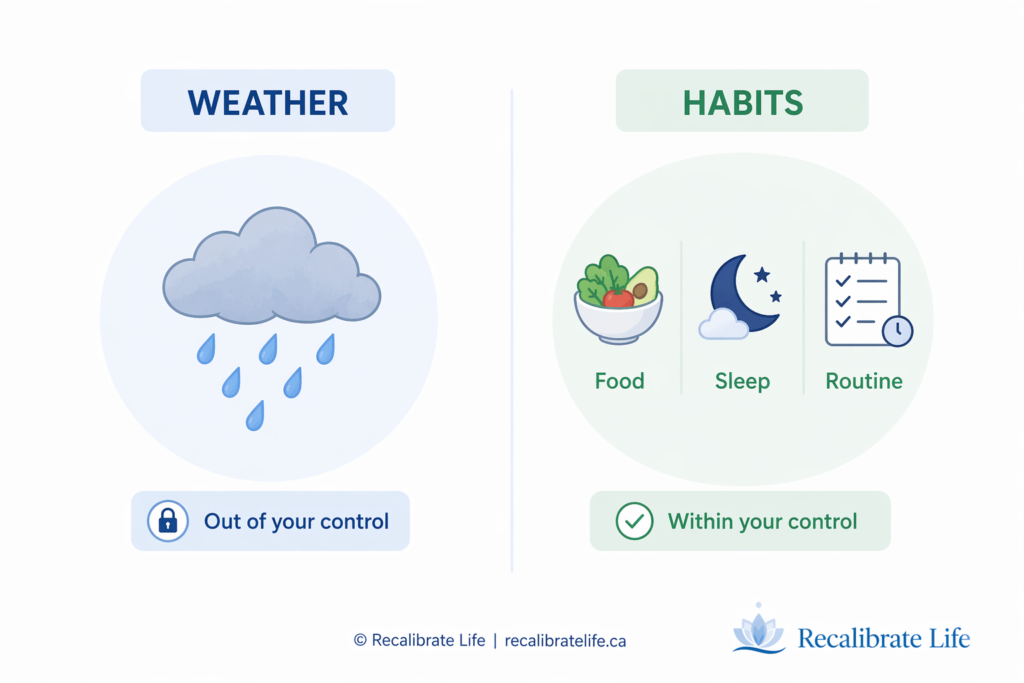
If there’s one takeaway from this post, it’s this: spend your energy on the triggers you can actually manage.
You can’t control the barometric pressure. You can’t stop storms from coming. If weather is a trigger for you, the best you can do is be aware of it and plan accordingly — rest more on those days, reduce other trigger exposure, give your system extra margin.
But you can control what you eat. You can control your sleep schedule. You can manage your exposure to light and sound. You can pace your activities. You can track your patterns and make informed decisions every day.
Those controllable triggers are where the real leverage is. They’re where your daily actions make the biggest difference in how you feel. And they’re where I found my answers — not in the weather forecast, but in my own habits.
If you’re building your personal trigger profile, my free Vestibular Trigger Checklist covers food, light, sound, sleep, stress, and environmental triggers with a daily tracker built in. Drop your email and I’ll send it to you.
Related posts: