I’m not going to give you a generic migraine food list copied from a medical website.
You can find those anywhere. And they’ll tell you to avoid aged cheese, red wine, chocolate, and MSG — which is fine, but it’s vague and impersonal. It doesn’t tell you what actually happens when a specific food hits a sensitized vestibular system in real life.
What I’m going to share instead is what I discovered through months of tracking, reacting, adjusting, and paying attention. These are the foods that affected me — not theoretically, but measurably. Some of them surprised me. Some of them changed how I think about food entirely.
And the biggest lesson wasn’t about any single food. It was this: it’s not just what you eat — it’s how sensitive your system is when you eat it.
In this post:
- The foods that consistently triggered my symptoms
- The meal that changed my understanding
- Why the same food hits differently on different days
- What I actually eat now
- The mindset shift that mattered more than any food list
Short version for brain fog readers: Processed foods, heavy fats, sauces with additives, and combination meals were my biggest triggers. But the reaction depended on my overall system load — sleep, stress, and environment all affected how strongly food hit. I stopped looking for a perfect food list and started managing my system instead.
The foods that consistently triggered me
These aren’t from a textbook. They’re from my body.
Processed sandwich meals were the clearest trigger. Commercial bread with sauces, fillings, and preservatives — the kind of meal you grab without thinking. I had one during an evening that was otherwise going fine, and within minutes the dizziness spiked so hard I couldn’t stand up. That was the moment food went from “maybe a factor” to “definitely a factor.”
Ketchup and condiment sauces surprised me more than anything. I never would have suspected ketchup could trigger dizziness. But the pattern was consistent — meals with ketchup, soy sauce, bottled dressings, and similar condiments reliably made things worse. Many of these contain MSG, high sodium, preservatives, and flavour enhancers that can activate migraine pathways.
Heavy, oily foods were a reliable trigger. Deep-fried food, butter-heavy meals, anything cooked with excessive oil. These consistently thickened the brain fog and amplified the imbalance. The heavier the meal, the harder the aftermath.
White bread and processed baked goods contributed more than I expected. Commercial bread contains dough conditioners, preservatives, and added sugars that don’t appear on the front of the packaging. When bread was part of a combination meal, the reaction was almost always stronger than the other ingredients alone would explain.
Restaurant food and complex meals were unpredictable. Meals with many mixed ingredients, sauces I didn’t control, and cooking methods I couldn’t see — these were harder to track but often caused reactions. The more ingredients in a meal, the higher the chance something in there would trigger my system.
The pattern that matters more than any food list
After tracking for weeks, the most important thing I noticed wasn’t which foods triggered me. It was this: the same food didn’t always cause the same reaction.
A meal that wiped me out on Tuesday might be completely fine on Friday. The food hadn’t changed. My system had.
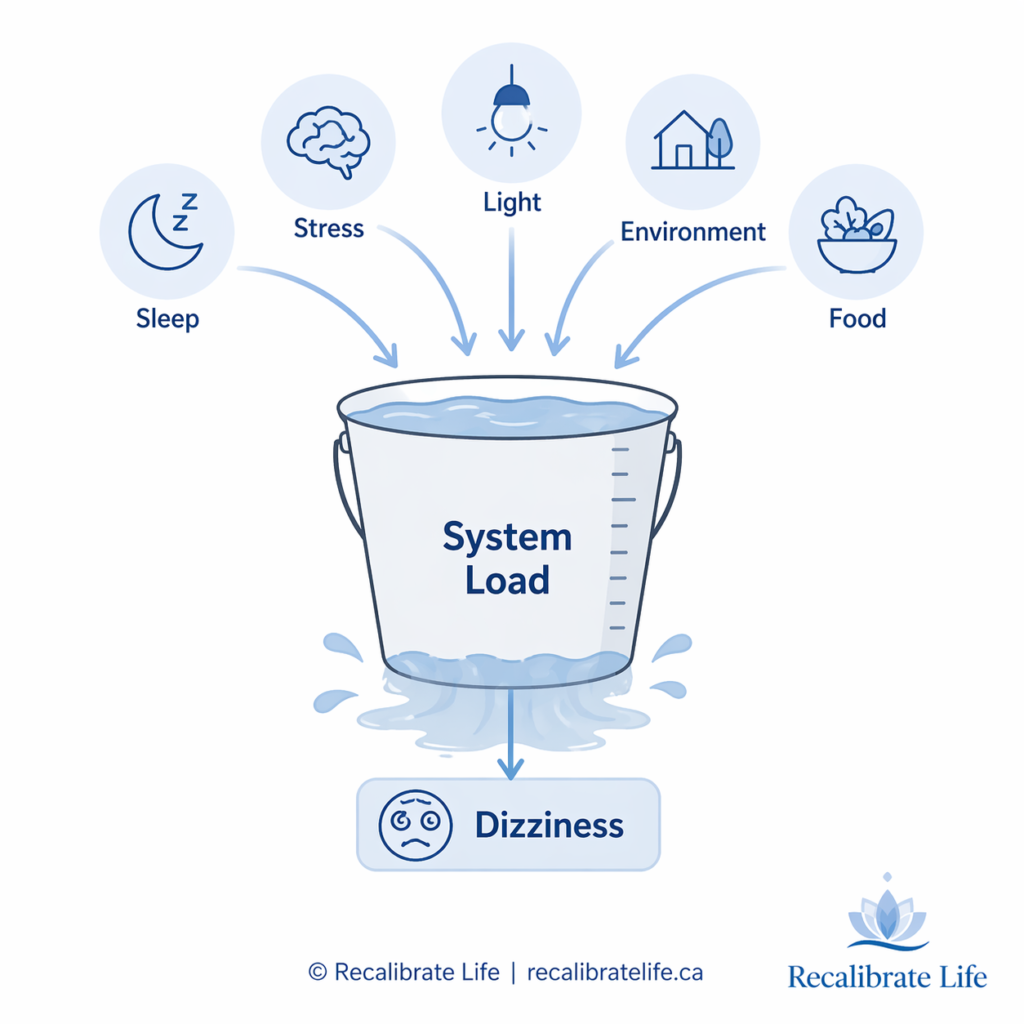
This was the breakthrough. Food wasn’t acting alone — it was interacting with everything else my system was dealing with. The reaction to any given meal depended on how much load was already in my bucket.
After a good night’s sleep, low stress, and a calm environment — I could handle a meal that would normally be risky. After poor sleep, a stressful day, or hours in a bright, noisy space — even a relatively simple meal could push me over the edge.
I stopped asking “which food is causing this?” and started asking “how sensitive is my system right now?” That shift changed my entire approach. Instead of building a rigid food list, I learned to read my system’s state and adjust accordingly.
The most surprising triggers
The foods I expected to be problems — like aged cheese and red wine — were actually not the ones that caught me off guard. The most surprising triggers were the everyday foods I assumed were safe.
A simple meal of tomato soup with a regular side left me with noticeable brain fog the next morning. There was nothing “extreme” about that meal. But tomatoes can be a migraine trigger for some people, and combined with whatever else my system was carrying that day, it was enough to affect me.
Omelettes became problematic — not because of the eggs themselves, but because of the oil they were cooked in and whatever I combined them with. An egg on its own was usually fine. An omelette with oil, bread, and ketchup was a completely different experience. The combination created a trigger load greater than any single ingredient.
The lesson: the most dangerous triggers aren’t always the obvious ones. They’re the everyday meals you don’t think twice about — the ones you eat on autopilot without realizing they’re adding load to a system that’s already at capacity.
Why food hits harder in certain environments
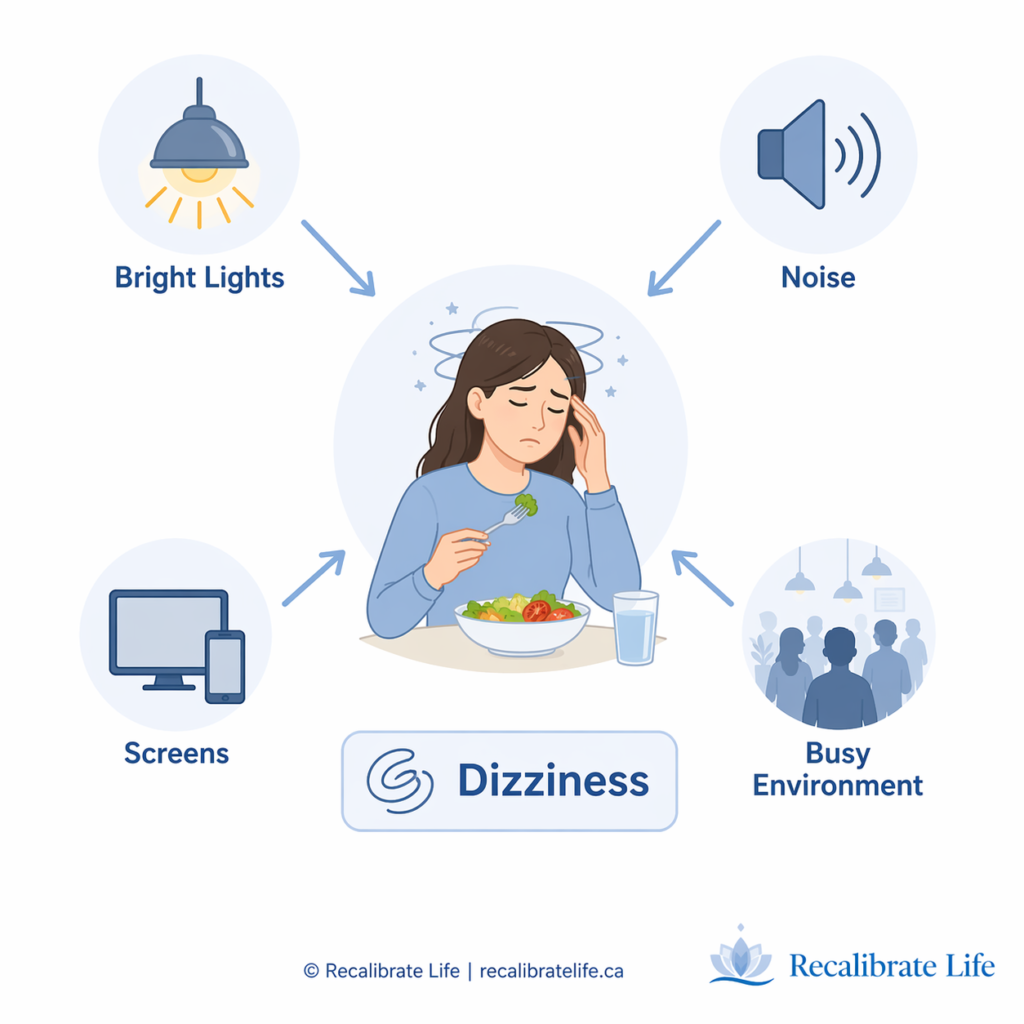
One pattern that took me a while to recognize was how much the environment I ate in affected my food reactions.
Eating a meal at home in a quiet, dimly lit room — manageable, even if the food had trigger ingredients. Eating the same meal in a bright, noisy restaurant or during a busy evening with screens on and conversations happening — significantly worse.
The food didn’t change. The total processing load on my brain changed. Adding a trigger meal on top of an already stimulating environment was often the combination that pushed me past my threshold.
This is also why some of my worst food reactions happened later in the day — by evening, my system had already accumulated hours of sensory input, stress, and activity. A meal at that point was entering a system that was already near capacity. The same food eaten in the morning, when my system was fresh, might have been completely fine.
Where you eat matters almost as much as what you eat. Calm environment, minimal distractions, focused on the meal — that’s the setup that gives your system the best chance of handling the food without overreacting.
What I actually eat now
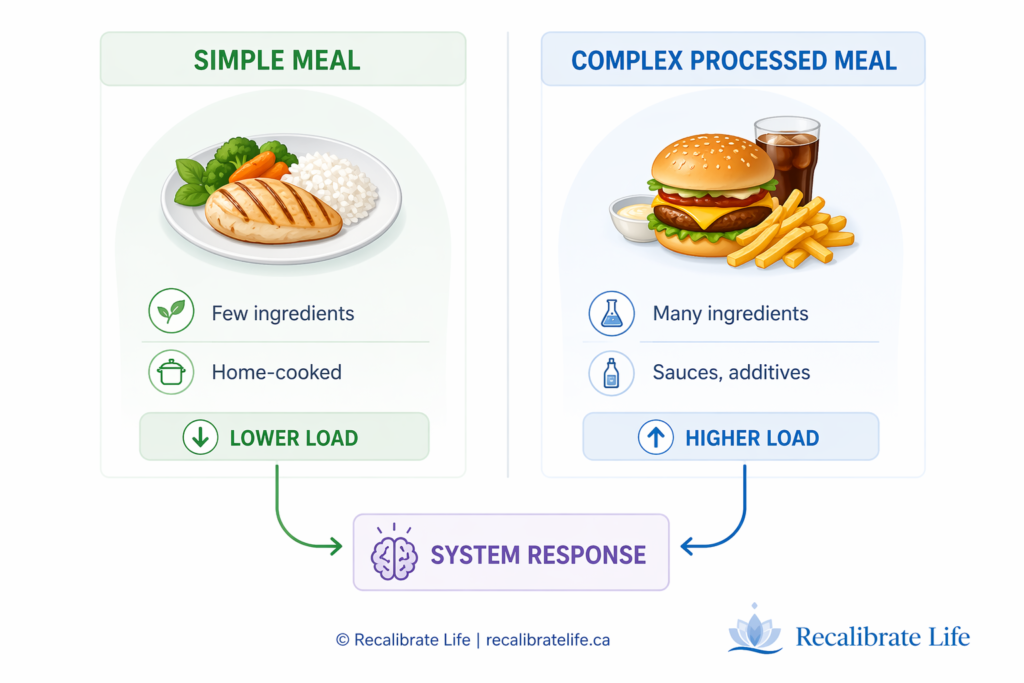
I don’t follow a perfect diet. I don’t have a rigid food list taped to my fridge. I follow a pattern.
Simpler meals. Fewer ingredients, less processing, less oil. A meal with three or four whole-food ingredients is almost always safer than a meal with fifteen processed ones. This doesn’t mean bland — it means intentional.
Home-cooked over restaurant food. When I cook at home, I know exactly what’s in the meal. No hidden sauces, no mystery oils, no additives I didn’t choose. That control makes a meaningful difference.
Reduced frequency of heavy meals. I noticed that giving my system breaks between meals — not constantly activating it with frequent heavy eating — helped keep my baseline lower. It’s not just what you eat. It’s how often your system is being stimulated. Spacing meals out and keeping them lighter reduced the cumulative load throughout the day.
Eating in calm settings. I make a conscious effort to eat without screens, without rushing, and in a quiet environment when possible. Reducing the multitasking around meals — not eating while watching TV, not scrolling while eating — means my brain processes the food without competing demands.
Adjusting based on the day. This is the biggest practical change. On days when my system is already loaded — poor sleep, high stress, lots of sensory exposure — I eat simpler and lighter. On days when my baseline is low and I feel more stable, I have more flexibility. The food strategy isn’t fixed — it responds to how my system is doing that day.
The mindset shift that changed everything
Early on, I treated food like the primary trigger. Every bad day, I’d analyze what I ate and try to identify the culprit. I was building a mental list of “safe” and “unsafe” foods and trying to follow it perfectly.
It didn’t work — because the same food kept giving different results on different days. The list was never reliable.
The shift that actually helped was moving from “what should I avoid?” to “what is my system’s capacity right now?” That moved food from being the villain to being one variable in a bigger equation. I stopped looking for a perfect food list and started understanding my system instead.
Food is a real trigger. But it doesn’t act alone. It interacts with sleep, stress, light, sound, activity level, and time of day. Managing food in isolation — without managing the rest — gives you incomplete results. Managing the whole system gives you real control.
A practical starting point
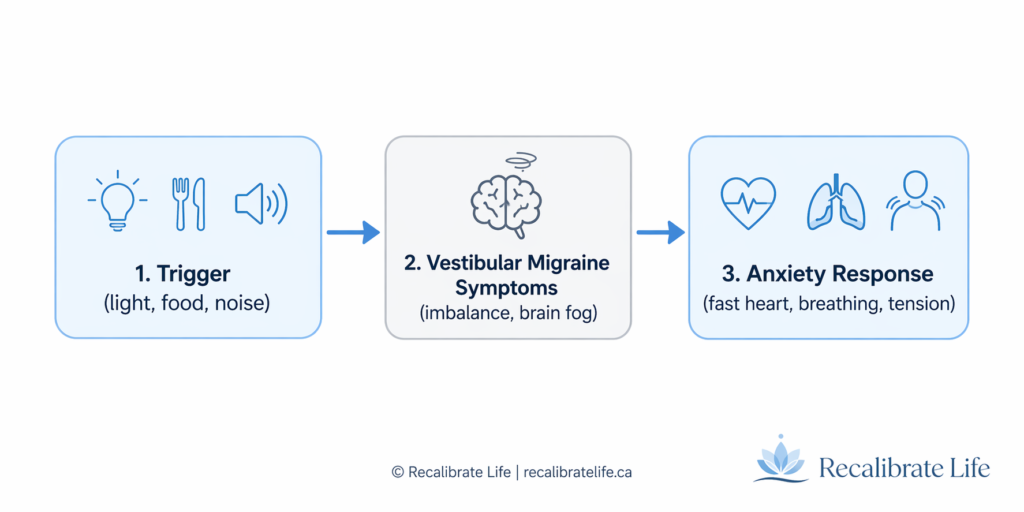
If you’re trying to figure out your own food triggers, here’s what worked for me:
Start noticing, not eliminating. Before you cut everything out, just pay attention. For two weeks, note what you eat and how you feel afterward. Don’t change anything yet — just observe. Patterns will start emerging on their own.
Track food alongside everything else. What you ate matters, but so does how you slept, your stress level, what environments you were in, and how much you’d already done that day. A food diary alone won’t give you clear answers. A full daily tracker will.
Reduce complexity first. Before you try eliminating specific foods, try simplifying your meals overall. Fewer ingredients, less processing, less oil. Often that broad simplification makes a noticeable difference without needing to identify the exact problematic ingredient.
Don’t panic about occasional reactions. A bad food reaction doesn’t mean you can never eat that food again. It might mean your system was already loaded that day. Try the same food again on a lower-load day and see if the result is different.
Focus on what you can control. You can control what you eat, when you eat, and the environment you eat in. You can’t control your vestibular system’s sensitivity on any given day. Work with the controllable factors and give yourself grace on the rest.
If you’re building your personal trigger profile — food and beyond — my free Vestibular Trigger Checklist covers food, light, sound, sleep, stress, and environmental triggers with a daily tracker built in. Drop your email and I’ll send it to you
Related posts: