For the first month after my symptoms started, I held onto one belief like a lifeline:
“This will pass.”
The physiotherapist said BPPV usually settles in one to two weeks. The doctor gave me medication. Everything pointed toward temporary. A glitch in the system. Something that would resolve with time and treatment.
So I waited. I pushed through. I kept telling myself it was just a matter of days.
But the days became weeks. And the weeks became a month. And somewhere in that month, a quieter, harder realization started forming — one I tried to push away before I finally had to face it.
This wasn’t temporary.
In this post:
- The month of denial
- When the shift happened
- The hardest phase I’ve been through
- What acceptance actually felt like
- The day I put my shoes back on
Short version for brain fog readers: I spent a month assuming my symptoms would resolve quickly. They didn’t. The hardest phase wasn’t the symptoms themselves — it was realizing they weren’t going away on a simple timeline. Acceptance didn’t mean giving up. It meant shifting from “when will this end?” to “how do I manage this?”
The month of denial
From July 24 to late August 2025, I lived in a strange middle ground — symptomatic but hopeful.
The BPPV diagnosis gave me a framework: crystals out of place, Epley maneuver, one to two weeks. That timeline became my anchor. Every day I’d wake up and check — is it better today? Is the imbalance less? Am I closer to normal?
Some days felt slightly better. Other days were worse. But the overall trend wasn’t what I expected. The spinning from BPPV improved with the Epley. But the underlying imbalance, the brain fog, the sensitivity to light and noise — those didn’t follow the same timeline. They persisted. They fluctuated. And they didn’t behave like anything I’d been told to expect.
I kept pushing through my daily life, assuming that persistence meant progress. That if I just powered through, my body would catch up. That normal was right around the corner.
It wasn’t.
The shift — August 24, 2025
There wasn’t a dramatic collapse. No single worst moment. No breakdown that forced the realization.
It was quieter than that.
After exactly one month of persistent symptoms — constant imbalance, unpredictable flare-ups, brain fog that never fully cleared — I looked at the pattern honestly for the first time. This wasn’t following the trajectory I’d been told. This wasn’t BPPV resolving on schedule. Something else was happening.
That’s when the direction changed. My physiotherapist and doctors shifted their focus from BPPV alone to vestibular migraine. The treatment approach changed. The conversation changed. And most importantly, my understanding of what I was dealing with changed.
August 24 wasn’t the day I had my worst symptoms. It was the day I stopped waiting for this to go away and started accepting that it was something I needed to actively manage. That shift — from passive waiting to active understanding — was the real turning point.
The hardest phase
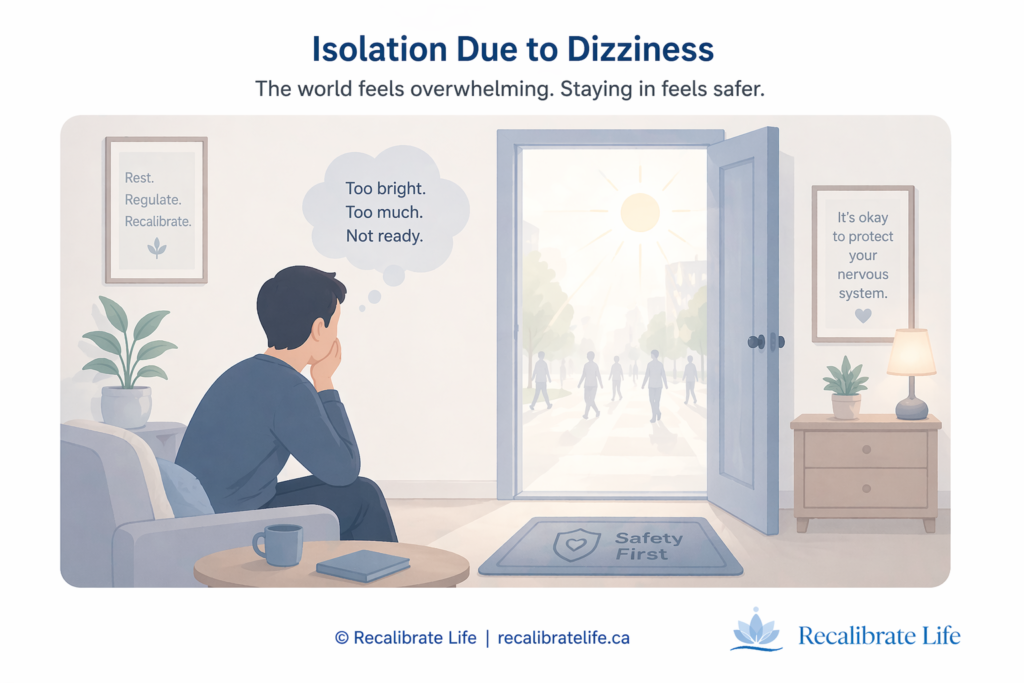
What followed that realization was, honestly, the hardest period of my life.
Once I stopped pushing through and actually confronted what was happening, the full weight of the condition hit me. My world shrank — not gradually, but quickly.
I couldn’t walk into a grocery store. The lights, the noise, the movement — everything that a store requires was too much for my system. Even taking the elevator in my building felt overwhelming. The motion, the enclosed space, the sensory shift between floors — it sounds absurd to describe, but it was real and it was terrifying.
For most of August, I hardly went outside. Not because I chose to stay in — but because going out felt genuinely unsafe. The imbalance was too unpredictable. The anxiety around triggering a flare-up was too strong. My confidence in my own body — in my ability to walk, stand, navigate a simple environment — had completely eroded.
I wore slippers for an entire month. Not shoes. Slippers. Because shoes meant going outside, and outside meant facing everything my system couldn’t handle.
There were days I cried. Not from the dizziness itself — but from the gap between who I was before July 24 and who I seemed to be becoming. The frustration of a body that wouldn’t cooperate. The fear that this might be permanent. The isolation of dealing with something invisible that nobody around me could fully understand.
There was a phase where the flare-ups were so intense that I genuinely wondered if something catastrophic was happening. When your balance system fails you repeatedly and unpredictably, your brain starts catastrophizing. “What if this never stops? What if it gets worse? What if I can’t function at all?”
I don’t say this for sympathy. I say it because if you’re in that phase right now — barely leaving home, scared of your own symptoms, wondering if this is your life now — I want you to know that someone else has been exactly where you are. And it didn’t stay that way.

Track symptoms, triggers, medications, appointments and recovery progress.
View on Etsy →
The day I put my shoes back on
I remember this moment clearly.
After weeks of isolation — weeks of slippers, of staying inside, of the world outside feeling like a threat — I had a day where things felt slightly better. Not good. Just slightly less bad.
And I made a decision: I’m going to put on my shoes and walk outside for five minutes.
Five minutes. That was the goal. Not thirty. Not an hour. Five.
I laced up my shoes for the first time in weeks. Stepped outside. And almost immediately, the imbalance was there. The unsteadiness. The sense that the ground wasn’t fully reliable.
But I kept walking.
Five minutes. Then I came home.
It wasn’t a triumph in any visible sense. Nobody watching would have thought “that person just did something brave.” But it was. Because it was the first time I chose to face the discomfort instead of hiding from it.
And that five-minute walk became the seed of everything that followed. The gradual exposure that rebuilt my tolerance. The daily walks that became part of my recovery system. The slow, patient process of teaching my brain that the world outside wasn’t dangerous — it was just overwhelming, and overwhelming could be managed.
What acceptance actually felt like
People talk about acceptance like it’s a peaceful moment — some quiet resolution where you make peace with your situation and move forward with grace.
That’s not how it felt.
Acceptance felt like exhaustion. It felt like running out of energy to fight the reality in front of me. It felt like putting down the weight of “this should be over by now” and picking up the heavier but more honest weight of “this is what it is.”
But once I put that first weight down, something shifted.
I stopped asking “when will this end?” and started asking “how do I manage this?”
I stopped expecting miracles and started respecting the process.
I stopped comparing myself to who I was before July 24 and started working with who I was right now.
The frustration didn’t disappear. The fear didn’t vanish. But they moved from the driver’s seat to the passenger seat. They were still there — but they were no longer steering.
And that made room for something more useful: patience. Strategy. Consistency. The willingness to take small steps even when they didn’t feel like enough.
What changed in my approach
Before acceptance, my approach was: push through, wait for it to pass, expect quick recovery.
After acceptance, everything changed.
Less frustration, more patience. I stopped measuring progress day by day and started looking at trends over weeks. That shift alone reduced my stress significantly — which, as I later learned, was itself a trigger that was making everything worse.
Process over outcome. I stopped fixating on “when will I be normal?” and started focusing on “what can I do today to be slightly better than yesterday?” Some days the answer was a five-minute walk. Some days it was just managing my triggers well. Small, consistent actions replaced grand expectations.
No guaranteed destination, but a clear direction. This is the hardest truth I had to accept: there’s no guarantee I’ll get back to 100% of what I was before. But I can get better. I can stabilize. I can build a life that works within my current reality while continuing to push that reality forward. That’s not settling — that’s recalibrating.
Understanding replaced guessing. Instead of randomly trying things and hoping for improvement, I started tracking triggers, identifying patterns, and making informed decisions. The condition stopped feeling like a mystery and started feeling like a system I could learn.
What I’d tell you if you’re in the early phase
If you’re in your first weeks or months with vestibular symptoms and you’re still holding onto “this will pass” — I understand why. That hope is protective. It gets you through the day.
But if the weeks are stretching on and the timeline your doctor gave you isn’t matching your reality, here’s what I want you to know.
Realizing it’s not temporary doesn’t mean giving up. It means shifting your approach from passive waiting to active management. That shift is where real progress starts.
The isolation phase doesn’t last. If you’re barely leaving home right now, if the world outside feels too overwhelming, if you can’t imagine walking into a store again — it doesn’t stay that way. It feels permanent when you’re in it. It’s not.
Five minutes is enough. You don’t need to conquer everything at once. Five minutes outside. One short walk. One small exposure. That’s where rebuilding starts. Not with grand gestures — with tiny, consistent steps.
Recovery isn’t linear. You’ll have weeks of progress followed by setbacks that feel like starting over. You’re not starting over. You’re building tolerance, and tolerance grows unevenly. The trend matters more than any single day.
The hardest part of my journey wasn’t the symptoms. It was realizing they weren’t temporary. But that realization — as painful as it was — is what led me to stop fighting the condition and start learning from it.
That’s when recovery actually began.
If you’re early in this journey and trying to identify what’s driving your symptoms, my free Vestibular Trigger Checklist can help you start tracking patterns from day one. Drop your email and I’ll send it to you.
Related posts: