When my symptoms first started, I spent hours searching for the perfect vestibular migraine diet. I wanted a list — a clear, definitive set of rules telling me exactly what to eat and what to avoid. Something that would just fix things.
That list doesn’t exist. At least not the way I was looking for it.
What I found instead was something more useful: a pattern. Not a rigid diet plan, but a way of eating that keeps my system stable instead of reactive. Simple ingredients. Minimal processing. Consistent meals. No dramatic changes day to day.
I didn’t find a perfect diet. I simplified my system. And that made more difference than any food list I found online.
In this post:
- What I actually eat — breakfast, lunch, dinner, snacks
- What I drink and why I quit caffeine
- Why I eat the same way on good days and bad days
- The approach that matters more than any food list
Short version for brain fog readers: I eat simple, home-cooked meals with minimal processing and few ingredients. Boiled eggs, vegetables, air-fried chicken or fish, fruits, plain curd, lots of water, ginger water instead of coffee. I keep it consistent — even on good days. The biggest lesson wasn’t about specific foods. It was about reducing the total load on my system.
Breakfast — light, simple, predictable
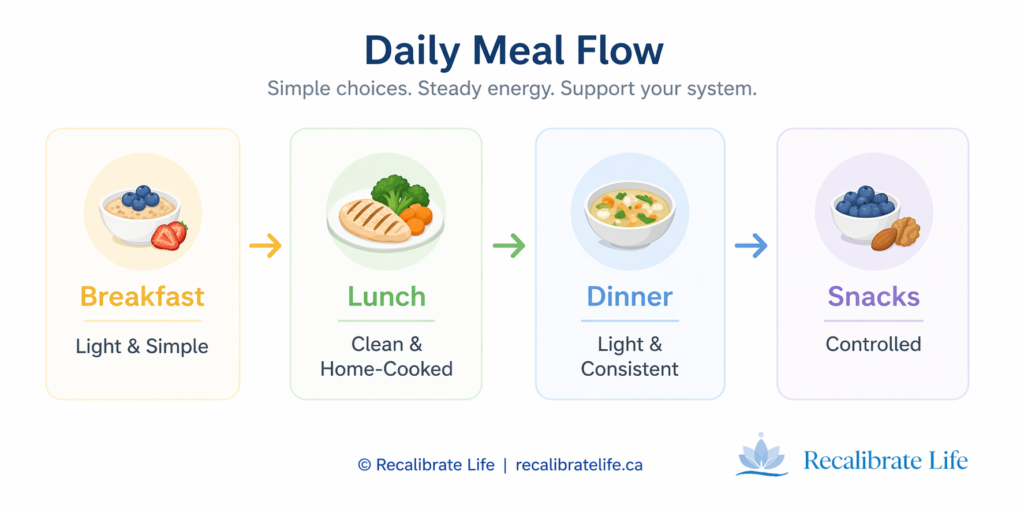
I keep breakfast very simple. This wasn’t always the case — before my symptoms started, breakfast was whatever was convenient. Processed bread, sauces, heavy combinations. I never thought about it.
Now, a typical breakfast looks like this: an apple with boiled eggs. Or a light omelette — no bread, no ketchup, no heavy additions. Some mornings it’s poha or upma — traditional Indian dishes that are light, warm, and easy to digest. Other mornings it’s sprouts.
The common thread is low processing, fewer ingredients, and nothing that asks my system to work hard first thing in the morning.
This matters because my system is most vulnerable in the morning. Sleep doesn’t always fully reset things — some mornings the fog is already there when I wake up. A heavy, processed breakfast on top of that is like adding load to a system that’s already at its limit. A light, simple breakfast gives my brain room to settle into the day without fighting food reactions at the same time.
I don’t eat the same thing every day — but the pattern is always the same. Simple. Light. Predictable. No surprises.
Lunch — clean, home-cooked
Lunch is usually vegetables with chicken or fish, air-fried rather than deep-fried. Sometimes with plain curd on the side. Always home-cooked, always with ingredients I chose and prepared myself.
The air fryer was a small change that made a real difference. I still eat protein — chicken and fish are staples. But removing the heavy oil from the cooking process significantly reduced how those meals affected my symptoms. Deep-fried food was one of my consistent triggers. Air-fried food with the same ingredients wasn’t. The food was the same — the preparation method changed the outcome.
I focus on fresh vegetables and clean protein. Minimal oil. No heavy sauces. No complex combinations with ten different ingredients competing for my system’s attention.
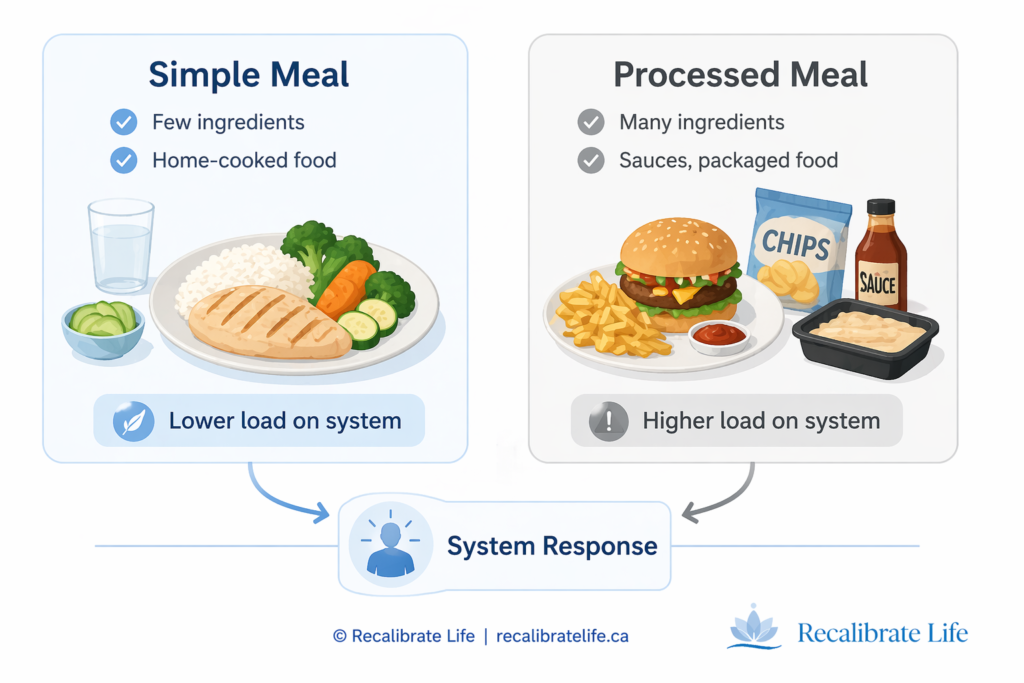
From my experience, heavy meals reliably increase dizziness and thicken brain fog. Processed meals cause faster reactions. The simpler the meal, the easier it is for my system to handle it. That’s not theory — it’s what showed up in my tracking repeatedly.
Dinner — consistency over variety
Dinner looks a lot like lunch. Vegetables. Light protein. Sometimes curd. Not dramatically different from what I ate six hours earlier.
That consistency is intentional. I used to eat very differently at dinner — heavier meals, more complex combinations, eating later in the evening. I noticed that heavy late dinners made my mornings worse. The next day’s brain fog was thicker. The next day’s baseline was lower.
Now I keep dinner simple and try to eat earlier rather than later. Giving my system time to process the food before sleep means I wake up with a cleaner baseline. It’s not always perfect — some evenings I eat later than ideal. But the pattern of keeping dinner light and simple stays consistent.
The temptation on good days is to eat something more indulgent for dinner — to “reward” a good day with heavier or more exciting food. I’ve learned to resist that. One of my clearest patterns is good day plus indulgent dinner equals next-day crash. So even when I feel great, dinner stays steady. Consistency matters more than variety.

Track symptoms, triggers, medications, appointments and recovery progress.
View on Etsy →
Snacks — controlled and predictable
I don’t snack randomly anymore. Before my symptoms, snacking was unconscious — grabbing whatever was around without thinking. Processed crackers, packaged food, whatever was convenient.
Now, if I snack between meals, it’s usually fruit. Low sugar, non-citrus options. Something that gives my body energy without adding a trigger load.
The shift from random snacking to controlled inputs made a bigger difference than I expected. Random snacking was like adding unpredictable variables into my system throughout the day — each one potentially containing trigger ingredients I didn’t track. Controlled snacking keeps the inputs predictable, which keeps the system stable.
Drinks — the change I didn’t expect to matter
This was one of the biggest shifts in my daily routine.
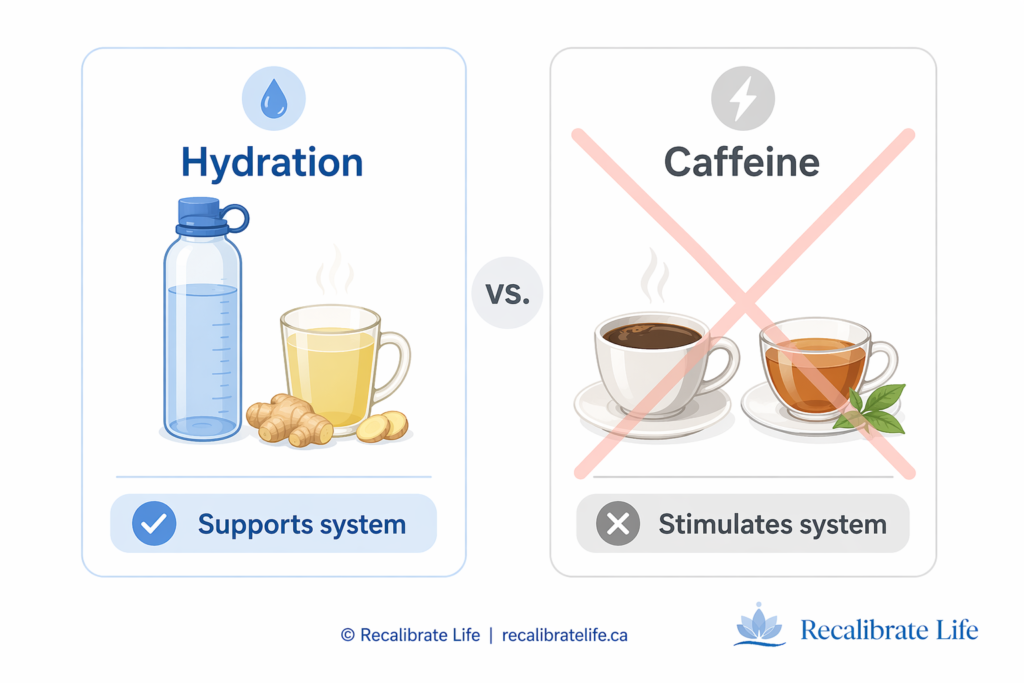
I drink three to four litres of water daily now. That sounds like a lot, but hydration has become non-negotiable. I noticed early on that the imbalance and brain fog are noticeably worse when I haven’t been drinking enough water. Dehydration adds load to an already sensitive system. Staying consistently hydrated reduces that load.
I carry a water bottle everywhere — it’s part of my toolkit, just like the ear plugs and the cap. It started as a response to the constant thirst I experienced when my symptoms first began. Now it’s a deliberate habit.
I stopped drinking coffee and tea entirely. This wasn’t an easy decision — caffeine was a daily habit before my symptoms started. But I noticed that caffeine increased my nervous system sensitivity. It’s a stimulant, and when your vestibular system is already overstimulated, adding more stimulation doesn’t help. Cutting it didn’t cause a dramatic overnight improvement, but it removed one more source of activation from a system that was already running too hot.
When I want something warm, I drink ginger water. Ginger has mild anti-inflammatory properties and doesn’t stimulate the nervous system the way caffeine does. It’s comforting without being activating. That swap — from coffee to ginger water — was simpler than I expected and I don’t miss caffeine at all now.
Why I eat the same way on good days and bad days
This might be the most important part of my food approach.
On good days, the temptation is real. You feel better. Your brain is clearer. Your balance is more stable. And your instinct is to relax the rules — eat something more exciting, try a restaurant, have a heavier meal. You’ve earned it, right?
I’ve learned the hard way that this is exactly how good days turn into bad next days. One of my clearest patterns has been good day plus relaxed eating plus maybe a later night equals next-morning crash.
So I don’t eat differently on good days. I don’t experiment. I don’t “celebrate” with risky food. I keep the exact same pattern — simple breakfast, clean lunch, light dinner — regardless of how I feel that day.
This isn’t about deprivation. It’s about understanding that good days aren’t a signal that my system is fully recovered. They’re a sign that my current approach is working. Changing the approach on the day it’s working is the fastest way to lose what you’ve built.
Consistency over variation. Every time.
The approach that matters more than any food list
After months of tracking and adjusting, here’s what I’ve learned about food and vestibular migraine:
The question isn’t “is this food allowed?” The question is: what’s my system’s current state? Because the same food on a low-load day might be completely fine, and on a high-load day might spike my symptoms. The food is one variable. The system state is the bigger variable.
Simplifying is more powerful than eliminating. I didn’t build a rigid list of banned foods. I simplified my overall approach — fewer ingredients, less processing, less oil, more whole foods. That broad simplification did more for me than trying to identify and eliminate every individual trigger ingredient.
Where and how you eat matters. Eating in a calm, quiet environment without screens or distractions gives your system the best chance of handling the food without overreacting. Eating the same meal in a bright, noisy restaurant while multitasking produces a very different result.
Hydration is foundational. Three to four litres of water daily. Not exciting. Not glamorous. But it’s one of the simplest things you can do that genuinely reduces symptom severity.
Consistency is the strategy. Not perfection. Not a complicated meal plan. Just the same simple approach, day after day, regardless of how you feel. That consistency is what builds a stable baseline — and a stable baseline is what makes everything else more manageable.
I don’t have a perfect diet. I have a pattern that works. And the best part is that it’s not hard to follow — because simplicity is the whole point.
If you’re trying to identify how food fits into your overall trigger profile, my free Vestibular Trigger Checklist covers food alongside light, sound, sleep, stress, and environmental triggers with a daily tracker built in. Drop your email and I’ll send it to you.
Related posts: